🌞 BondaNews 🐝

AI-curated positive headlines from trusted sources

Royal Philharmonic Orchestra at 80 review – birthday celebration champions bold creativity

Royal Philharmonic Orchestra at 80 review – birthday celebration champions bold creativity

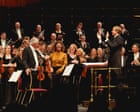
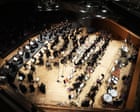
Royal Albert Hall, London Julia Fischer, Pablo Ferrández and Jan Lisiecki brought poetry and virtuosity to Beethoven’s Triple Concerto tour de force and there was vision and cohesion in Strauss’s Ein Heldenleben; Errollyn Wallen’s energetic Flare opened a special evening The year 1946 had its moments. The UN held its first meeting, Winston Churchill delivered his “iron curtain” speech and in London Sir Thomas Beecham founded the Royal Philharmonic Orchestra. Over 80 years, few ensembles have been as inventive or chameleonlike, embracing everything from film soundtracks such as The Bridge on the River Kwai to pumped-up rock anthems in Hooked on Classics. This birthday celebration may have looked a little safe on paper, but each work represented a creative leap forward: in 1804, Beethoven’s Triple Concerto was the first to feature an entire piano trio as concertante soloist; in 1899, Richard Strauss’s Ein Heldenleben was the composer’s most colossally orchestrated score to date. Vasily Petrenko, the latest in a line of RPO music directors that includes Rudolf Kempe and André Previn, proved an obliging accompanist in the Beethoven before delivering an affectionate and spacious account of the Strauss. Continue reading...

The GuardianThe Guardian·Sep 24, 2026
87%
entertainmentarts Read full article →
Hallé/Wong review – MacMillan’s new symphony centres a great concert hall’s birthday celebrations

Hallé/Wong review – MacMillan’s new symphony centres a great concert hall’s birthday celebrations

Bridgewater Hall, Manchester James MacMillan’s sixth symphony proved an intricate, intriguing and forward-looking work. It was well paired with Stephen Hough’s exuberant ‘Emperor’ piano concerto and a Liszt rarity We complain a lot about concert halls in the UK. The acoustics of the Barbican, Royal Festival Hall and Royal Albert Hall; the practicality of Usher Hall and St George’s Bristol; those seats at Snape Maltings, and that foyer at Birmingham’s Symphony Hall. But do we really have it so bad? As Manchester’s Hallé opens its season with a celebration of 30 years of the Bridgewater Hall, it’s a good moment to remember what we’ve gained in the three decades since a car park became Britain’s best acoustic. A flagship London hall may still be a fantasy, but with Gateshead’s Foster-designed Glasshouse, Saffron Hall, Kings Place and Milton Court all opening their doors since 2000, it’s hard to feel despondent. Continue reading...

The GuardianThe Guardian·Sep 25, 2026
85%
entertainmentsports Read full article →
Korea review – a nirvana of wild beauty shattered by the 20th century

Korea review – a nirvana of wild beauty shattered by the 20th century

British Museum, London The staggering resourcefulness and fantastic originality of bygone artisans is showcased in earthenware so exquisite it will soothe your soul. But a lurch into the modern breaks the spell Can they do it again? The runaway success of the Bayeux tapestry has put the British Museum in a league of its own, perhaps making it, at this moment, the leading museum on earth – and it’s rapidly following up with Korea, a survey of “2,000 years of creativity” in a land that, before its sufferings in the 20th century, enjoyed millennia of calm, at least to judge from its art. But it’s a blockbuster with a tragic flaw, a lovely broken vase badly stuck together. You are lured at first into a nirvana of beauty. A giant bronze bell from a Buddhist monastery, cast in the eighth century AD and bulging with dragons, flames and flowery embossments, strikes the tone. It calls you to meditation. A gong adds to the harmony (and if you need that underlining, there are bells and gongs on the now obligatory exhibition soundtrack). I was held rapt by this Buddhist period in Korea’s history, when the contemplative religion from India interacted with the artistic influence of China to inspire ecstatic hand-copied sutras (spiritual scriptures) and slender little statuettes of bodhisattvas (Buddhist saints who have achieved enlightened holiness). Continue reading...
The GuardianThe Guardian·Sep 27, 2026
83%
artstravel Read full article →
Himari: Debut album review – teenage prodigy’s playing has depth and feeling

Himari: Debut album review – teenage prodigy’s playing has depth and feeling

Himari/Berlin Philharmonic/Weigle/Wang (Decca) The programme feels a little safe but the 15-year-old Japanese violinist impresses in her debut recording of works by Wieniawski, Chopin, Godowsky and Sibelius When 13-year-old Himari Yoshimura took to the stage with the Berlin Philharmonic in March 2025, she became the youngest Asian soloist to appear with the orchestra in a subscription concert. A subsequent contract with Decca made her the label’s youngest-ever female signing. Her debut album features that Berlin performance of Wieniawski’s Violin Concerto No 1, alongside studio recordings of music by Chopin, Godowsky and Sibelius. What is immediately apparent is the technical security of her playing, combined with an easy lyricism across the instrument’s full range. The fearsome double stopping in the Wieniawski is impressive, with some supple dynamic phrasing in the upper register. Occasionally a leap to a high note comes up a hair’s breadth short, something absent from the studio recordings, but this is nevertheless a significant performance. She’s not entirely helped by Sebastian Weigle’s smooth but staid accompaniments. It’s not the greatest concerto and needs a lighter touch to give it some lift (compare Michael Rabin and Adrian Boult). Continue reading...

The GuardianThe Guardian·Sep 24, 2026
82%
entertainmentsports Read full article →
Democracy blindsides Silicon Valley’s power players looking to transform the world with AI

Democracy blindsides Silicon Valley’s power players looking to transform the world with AI

‘The push against datacenters speaks to the frustration of people who don’t feel they are making the choices in their lives’ The Stanford ethicist Rob Reich was once invited to a dinner organized by a Silicon Valley mogul to discuss what a state designed to maximize science and tech powered by commercial models might look like. The gathered technologists were drawn to the idea of building a small nation-state dedicated to the endeavor, Reich recalls in “System Error: Where Big Tech Went Wrong and How We Can Reboot it”. When Reich asked whether this state would be a democracy, he got a cool no. “Democracy is too slow, and it holds science back,” he was told. “To optimize for science, we need a beneficent technocrat in charge.” Continue reading...

The GuardianThe Guardian·Sep 27, 2026
81%
politicsbusiness Read full article →
Novelist accused of using AI to write book removed from French prize list

Novelist accused of using AI to write book removed from French prize list

Thélyson Orélien had been in the running to win a top literary prize before the AI claim emerged on social media The organisers of France’s most prestigious literary prize said they had removed a critically acclaimed novel by a Canadian-Haitian writer from the longlist after an anonymous online account claimed the book was “almost entirely” written by AI. The Académie Goncourt, a Paris-based literary organisation, said on Friday its decision to withdraw Thélyson Orélien’s novel C’était ça ou mourir (It Was That or Die) was “driven by the desire to preserve the integrity of the Goncourt prize and the academy itself, whose central role is to promote and honour literature written by women and men”. Continue reading...

The GuardianThe Guardian·Sep 25, 2026
81%
entertainmentpolitics Read full article →
‘Birdwatching is close to rapture’: Margaret Atwood on why she has given C$1m to avian research

‘Birdwatching is close to rapture’: Margaret Atwood on why she has given C$1m to avian research

Award-winning novelist celebrates late partner’s love of birds with gift to establish the Graeme Gibson chair in avian biology If she could be any bird, Margaret Atwood would transform into a raven. “They’re very smart. They’re social, playful and just a very successful bird,” she says while seated in a corner of a bird observatory in the Lake Erie Islands archipelago. “They’re quite an intelligent problem solver.” The observatory, which she set up with her late partner, Graeme Gibson, is located on the west shore of Pelee Island – the southernmost community in Canada – and is so new that there are no lightbulbs in a handful of lamps. Continue reading...

The GuardianThe Guardian·Sep 25, 2026
81%
travelpolitics Read full article →